



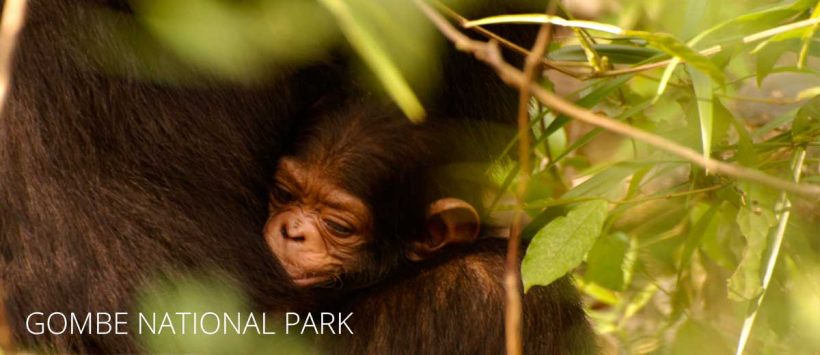
Gombe National Park is one of Tanzania’s national parks, covering 52 square kilometers (20 square miles). Located in western Tanzania north of Kigoma on the shore of Lake Tanganyika, the park is bordered by mountains and the lake. Heavily covered in forest, it is best known for its chimpanzee communities studied by British primatologist and anthropologist, Jane Goodall. Apart from chimpanzees, other primates that can be found in Gombe include beachcomber olive baboons, red-tailed monkeys, red colobus, blue monkeys, and vervet monkeys.
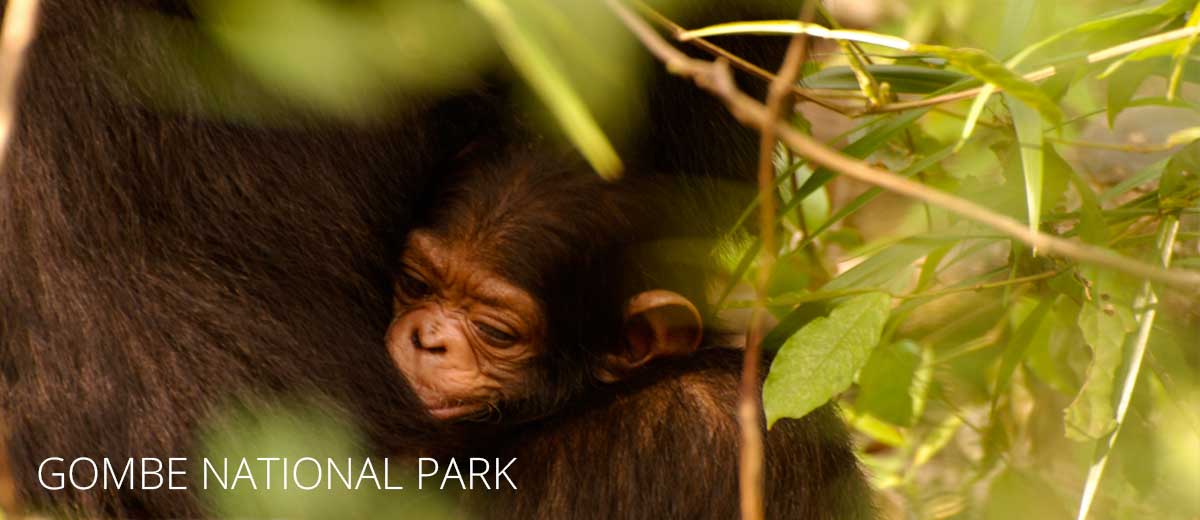
TABLE OF CONTENTS
Size:
52 sq km (20 sq mi), one of Tanzania’s smaller national parks.
Location:
Western Tanzania, north of Kigoma on the shore of Lake Tanganyika.
Getting to:
By boat from Kigoma (1-3 hours) – this remains the only way to reach the park. Access to Kigoma has improved with more consistent Air Tanzania flight schedules from Dar es Salaam or Arusha. One can also drive to Kigoma by rough dirt roads or take the train, though road travel remains challenging.
Best time to visit:
The dry season from July to October is now considered the premium time to visit. During this period, chimpanzees tend to stay on the lower slopes, making trekking easier, and there is a lower risk of malaria and slippery trails compared to the wet season (November, March-May). While February to June can still be good for finding chimps, July to October offers the best overall visitor conditions. November rains are common.
Accommodation & Services:
- Park fees
- Park map
- Safari operators
- Safari Lodges
- Camp Sites
Why should you visit?:
As mentioned above, Gombe is known best for its chimpanzee communities made famous by Jane Goodall. Goodall’s groundbreaking behavioural research program on chimpanzees at Gombe is the longest-running study of its kind worldwide and remains active today. In her studies, she found that humans and primates have a lot in common, and that “it isn’t only human beings who have personality, who are capable of rational thought and emotions like joy and sorrow”.
Apart from primates, other animals frequently seen in the park include over 200 bird species, 11 species of snakes, hippopotami, leopards and bushpigs. The park continues to support this rich biodiversity.
So what are you waiting for? Start planning your safari now!